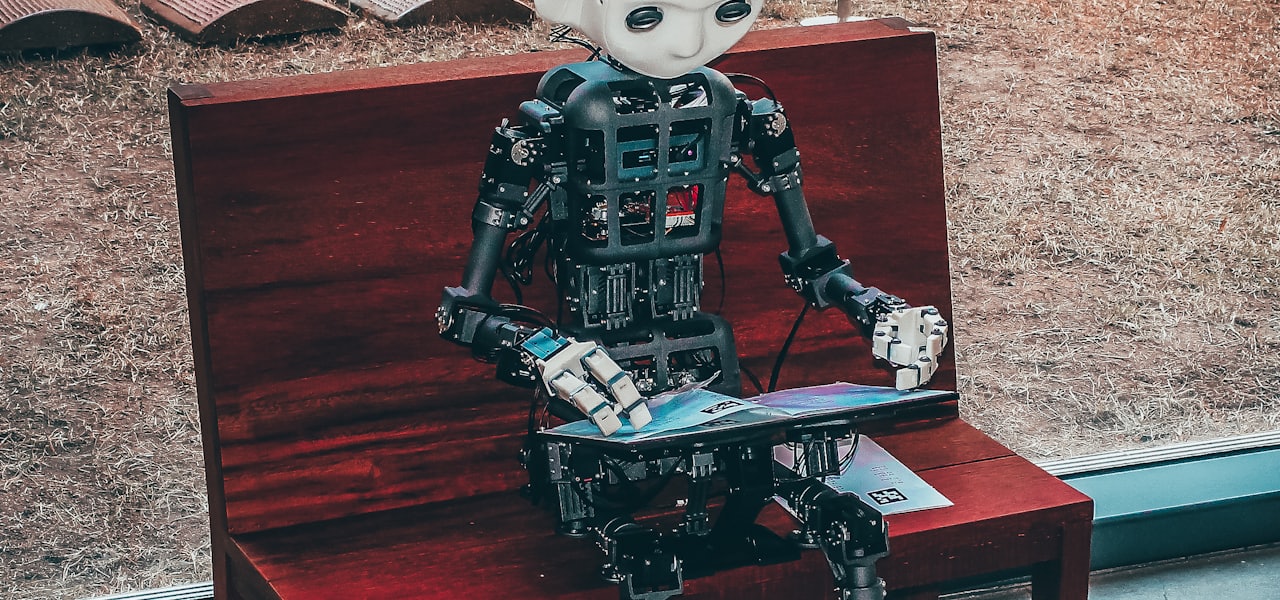
A cryptosystem is a set of cryptographic algorithms that map ciphertexts and plaintexts to each other. == Private-key cryptosystems == Private-key cryptosystems use the same key for encryption and decryption. Caesar cipher Substitution cipher Enigma machine Data Encryption Standard Twofish Serpent Camellia Salsa20 ChaCha20 Blowfish CAST5 Kuznyechik RC4 3DES Skipjack Safer IDEA Advanced Encryption Standard, also known as AES and Rijndael. == Public-key cryptosystems == Public-key cryptosystems use a public key for encryption and a private key for decryption. Diffie–Hellman key exchange RSA encryption Rabin cryptosystem Schnorr signature ElGamal encryption Elliptic-curve cryptography Lattice-based cryptography McEliece cryptosystem Multivariate cryptography Isogeny-based cryptography
Afghan Girls Robotics Team
The Afghan Girls Robotics Team, also known as the Afghan Dreamers, is an all-girl robotics team from Herat, Afghanistan, founded through the Digital Citizen Fund (DCF) in 2017 by Roya Mahboob and Alireza Mehraban. It is made up of girls between ages 12 and 18 and their mentors. Several members of the team were relocated to Qatar and Mexico by humanitarian and tech entrepreneur Sarah Porter following the fall of Kabul in August 2021. A documentary film featuring members of the team, titled Afghan Dreamers, was released by MTV Documentary Films in 2023. == Origins == The Afghan Girls Robotics Team was co-founded in 2017 by Roya Mahboob, who is their coach, mentor and sponsor, and founder of the Digital Citizen Fund (DCF), which is the parent organization for the team. Dean Kamen was planning a 2017 competition in the United States and had recruited Mahboob to form a team from Afghanistan. Out of 150 girls, 12 were selected for the first team. Before parts were sent by Kamen, they trained in the basement of the home of Mahboob's parents, with scrap metal and without safety equipment under the guidance of their coach, Mahboob's brother Alireza Mehraban, who is also a co-founder of the team. == 2017 and 2018 == In 2017, six members of the Afghan Girls Robotics Team traveled to the United States to participate in the international FIRST Global Challenge robotics competition. Their visas were rejected twice after they made two journeys from Herat to Kabul through Taliban-controlled areas, before officials in the United States government intervened to allow them to enter the United States. Customs officials also detained their robotics kits, which left them two weeks to construct their robot, unlike some teams that had more time. They were awarded a Silver medal for Courageous Achievement. One week after they returned home from the competition, the father of team captain Fatemah Qaderyan, Mohammad Asif Qaderyan, was killed in a suicide bombing. After their United States visas expired, the team participated in competitions in Estonia and Istanbul. Three of the 12 members participated in the 2017 Entrepreneurial Challenge at the Robotex festival in Estonia, and won the competition for their solar-powered robot designed to assist farmers. In 2018, the team trained in Canada, continued to travel in the United States for months and participate in competitions. == 2019 == The Afghan Girls Robotics team had aspirations to develop a science and technology school for girls in Afghanistan. Roya Mahboob interfaced with the School of Engineering and Applied Sciences (SEAS), the School of Architecture, and the Whitney and Betty MacMillan Center for International and Area Studies Yale University to design the infrastructure for what they named The Dreamer Institute. == 2020 == In March 2020, the governor of Herat at the time, in response to the COVID-19 pandemic in Afghanistan and a scarcity of ventilators, sought help with the design of low-cost ventilators, and the Afghan Girls Robotics Team was one of six teams contacted by the government. Using a design from Massachusetts Institute of Technology and with guidance from MIT engineers and Douglas Chin, a surgeon in California, the team developed a prototype with Toyota Corolla parts and a chain drive from a Honda motorcycle. UNICEF also supported the team with the acquisition of necessary parts during the three months they spent building the prototype that was completed in July 2020. Their design costs around $500 compared to $50,000 for a ventilator. In December 2020, Minister of Industry and Commerce Nizar Ahmad Ghoryani donated funding and obtained land for a factory to produce the ventilators. Under the direction of their mentor Roya Mahboob, the Afghan Dreamers also designed a UVC Robot for sanitization, and a Spray Robot for disinfection, both of which were approved by the Ministry of Health for production. == 2021 == In early August 2021, Somaya Faruqi, former captain of the team, was quoted by Public Radio International about the future of Afghanistan, stating, "We don’t support any group over another but for us what’s important is that we be able to continue our work. Women in Afghanistan have made a lot of progress over the past two decades and this progress must be respected." On August 17, 2021, the Afghan Girls Robotics Team and their coaches were reported to be attempting to evacuate, but unable to obtain a flight out of Afghanistan, and a lawyer appealed to Canada for assistance regarding the evacuation of the team members. As of August 19, 2021, nine members of the team and their coaches had evacuated to Qatar. The founder of the team, Roya Mahboob, and DCF board member, Elizabeth Schaeffer Brown, were previously in contact with the Qatari government to assist the team members in their evacuation from Afghanistan. By August 25, 2021, some members arrived in Mexico. Saghar, a team member who evacuated to Mexico, said, "We wanted to continue the path that we started to continue to go for our achievements and to go for having our dreams through reality. So that's why we decided to leave Afghanistan and go for somewhere safe" in an interview with The Associated Press. The members who have left Afghanistan participated in an online robotics competition in September and plan to continue their education. A documentary film titled Afghan Dreamers, produced by Beth Murphy and directed by David Greenwald, was in post-production when the team began to evacuate. == 2022 == The Afghan Dreamers were involved in a training program at the Texas A&M University at Qatar’s STEM Hub. == 2023 == The Afghan Girls Robotics Team had a booth at the 5th UN Conference on the Least Developed Countries, where they displayed some of the robots the team had constructed. == Afghan Dreamers documentary == The Afghan Dreamers documentary from MTV Documentary Films premiered in May 2023 on Paramount+. The film was directed by David Greenwald and produced by David Cowan and Beth Murphy. In a review for Screen Daily, Wendy Ide wrote, "This film, with its likeable cast of girl nerds and positive message, should enjoy a warm reception on the festival circuit, and will be of particular interest to events seeking to showcase women's stories from around the world. It also serves as a timely cautionary tale – a case study on just how quickly the rights and the opportunities of women can be curtailed, at the behest of the men in power." == Honors and awards == 2017 Silver medal for Courageous Achievement at the FIRST Global Challenge, science and technology 2017 Benefiting Humanity in AI Award at World Summit AI 2017 Winner, Entrepreneurship Challenge at Robotex in Estonia 2018 Permission to Dream Award, Raw Film Festival 2018 Conrad Innovation Challenge, Raw Film Festival 2018 Rookie All Star – District Championship, Canada 2018 Asia Game Changer Award Honoree 2019 Inspiring in Engineering Award – FIRST Detroit World Championship 2019 Asia Game Changer Award of California 2019 Safety Award – FIRST Global, Dubai 2021 Forbes 30 Under 30 Asia 2022 World Championships, Genoa, Switzerland
LIBSVM
LIBSVM and LIBLINEAR are two popular open source machine learning libraries, both developed at the National Taiwan University and both written in C++ though with a C API. LIBSVM implements the sequential minimal optimization (SMO) algorithm for kernelized support vector machines (SVMs), supporting classification and regression. LIBLINEAR implements linear SVMs and logistic regression models trained using a coordinate descent algorithm. The SVM learning code from both libraries is often reused in other open source machine learning toolkits, including GATE, KNIME, Orange and scikit-learn. Bindings and ports exist for programming languages such as Java, MATLAB, R, Julia, and Python. It is available in e1071 library in R and scikit-learn in Python. Both libraries are free software released under the 3-clause BSD license.
Probably approximately correct learning
In computational learning theory, probably approximately correct (PAC) learning is a framework for mathematical analysis of machine learning. It was proposed in 1984 by Leslie Valiant. In this framework, the learner receives samples and must select a generalization function (called the hypothesis) from a certain class of possible functions. The goal is that, with high probability (the "probably" part), the selected function will have low generalization error (the "approximately correct" part). The learner must be able to learn the concept given any arbitrary approximation ratio, probability of success, or distribution of the samples. The model was later extended to treat noise (misclassified samples). An important innovation of the PAC framework is the introduction of computational complexity theory concepts to machine learning. In particular, the learner is expected to find efficient functions (time and space requirements bounded to a polynomial of the example size), and the learner itself must implement an efficient procedure (requiring an example count bounded to a polynomial of the concept size, modified by the approximation and likelihood bounds). == Definitions and terminology == In order to give the definition for something that is PAC-learnable, we first have to introduce some terminology. For the following definitions, two examples will be used. The first is the problem of character recognition given an array of n {\displaystyle n} bits encoding a binary-valued image. The other example is the problem of finding an interval that will correctly classify points within the interval as positive and the points outside of the range as negative. Let X {\displaystyle X} be a set called the instance space or the encoding of all the samples. In the character recognition problem, the instance space is X = { 0 , 1 } n {\displaystyle X=\{0,1\}^{n}} . In the interval problem the instance space, X {\displaystyle X} , is the set of all bounded intervals in R {\displaystyle \mathbb {R} } , where R {\displaystyle \mathbb {R} } denotes the set of all real numbers. A concept is a subset c ⊂ X {\displaystyle c\subset X} . One concept is the set of all patterns of bits in X = { 0 , 1 } n {\displaystyle X=\{0,1\}^{n}} that encode a picture of the letter "P". An example concept from the second example is the set of open intervals, { ( a , b ) ∣ 0 ≤ a ≤ π / 2 , π ≤ b ≤ 13 } {\displaystyle \{(a,b)\mid 0\leq a\leq \pi /2,\pi \leq b\leq {\sqrt {13}}\}} , each of which contains only the positive points. A concept class C {\displaystyle C} is a collection of concepts over X {\displaystyle X} . This could be the set of all subsets of the array of bits that are skeletonized 4-connected (width of the font is 1). Let EX ( c , D ) {\displaystyle \operatorname {EX} (c,D)} be a procedure that draws an example, x {\displaystyle x} , using a probability distribution D {\displaystyle D} and gives the correct label c ( x ) {\displaystyle c(x)} , that is 1 if x ∈ c {\displaystyle x\in c} and 0 otherwise. Now, given 0 < ϵ , δ < 1 {\displaystyle 0<\epsilon ,\delta <1} , assume there is an algorithm A {\displaystyle A} and a polynomial p {\displaystyle p} in 1 / ϵ , 1 / δ {\displaystyle 1/\epsilon ,1/\delta } (and other relevant parameters of the class C {\displaystyle C} ) such that, given a sample of size p {\displaystyle p} drawn according to EX ( c , D ) {\displaystyle \operatorname {EX} (c,D)} , then, with probability of at least 1 − δ {\displaystyle 1-\delta } , A {\displaystyle A} outputs a hypothesis h ∈ C {\displaystyle h\in C} that has an average error less than or equal to ϵ {\displaystyle \epsilon } on X {\displaystyle X} with the same distribution D {\displaystyle D} . Further if the above statement for algorithm A {\displaystyle A} is true for every concept c ∈ C {\displaystyle c\in C} and for every distribution D {\displaystyle D} over X {\displaystyle X} , and for all 0 < ϵ , δ < 1 {\displaystyle 0<\epsilon ,\delta <1} then C {\displaystyle C} is (efficiently) PAC learnable (or distribution-free PAC learnable). We can also say that A {\displaystyle A} is a PAC learning algorithm for C {\displaystyle C} . == Equivalence == Under some regularity conditions these conditions are equivalent: The concept class C is PAC learnable. The VC dimension of C is finite. C is a uniformly Glivenko-Cantelli class. C is compressible in the sense of Littlestone and Warmuth
Sample exclusion dimension
In computational learning theory, sample exclusion dimensions arise in the study of exact concept learning with queries. In algorithmic learning theory, a concept over a domain X is a Boolean function over X. Here we only consider finite domains. A partial approximation S of a concept c is a Boolean function over Y ⊆ X {\displaystyle Y\subseteq X} such that c is an extension to S. Let C be a class of concepts and c be a concept (not necessarily in C). Then a specifying set for c w.r.t. C, denoted by S is a partial approximation S of c such that C contains at most one extension to S. If we have observed a specifying set for some concept w.r.t. C, then we have enough information to verify a concept in C with at most one more mind change. The exclusion dimension, denoted by XD(C), of a concept class is the maximum of the size of the minimum specifying set of c' with respect to C, where c' is a concept not in C.
Snap (computer graphics)
In computer graphics, snapping allows an object to be easily positioned in alignment with grid lines, guide lines or another object, by causing it to automatically jump to an exact position when the user drags it to the proximity of the desired location. Some CAD software provides a "Snap" pull-down menu with diverse options as preferences for the practice of the operation. In Windows, with the "snap windows" option enabled, snapping a window against the top (or side) edge of the screen causes it to change into full screen (or half-screen for multitasking). Software snapping is analogous to hardware detents which serve to indicate discrete values or steps of an input device.
Policy gradient method
Policy gradient methods are a class of reinforcement learning algorithms and a sub-class of policy optimization methods. Unlike value-based methods which learn a value function to derive a policy, policy optimization methods directly learn a policy function π {\displaystyle \pi } that selects actions without consulting a value function. For policy gradient to apply, the policy function π θ {\displaystyle \pi _{\theta }} is parameterized by a differentiable parameter θ {\displaystyle \theta } . == Overview == In policy-based RL, the actor is a parameterized policy function π θ {\displaystyle \pi _{\theta }} , where θ {\displaystyle \theta } are the parameters of the actor. The actor takes as argument the state of the environment s {\displaystyle s} and produces a probability distribution π θ ( ⋅ ∣ s ) {\displaystyle \pi _{\theta }(\cdot \mid s)} . If the action space is discrete, then ∑ a π θ ( a ∣ s ) = 1 {\displaystyle \sum _{a}\pi _{\theta }(a\mid s)=1} . If the action space is continuous, then ∫ a π θ ( a ∣ s ) d a = 1 {\displaystyle \int _{a}\pi _{\theta }(a\mid s)\mathrm {d} a=1} . The goal of policy optimization is to find some θ {\displaystyle \theta } that maximizes the expected episodic reward J ( θ ) {\displaystyle J(\theta )} : J ( θ ) = E π θ [ ∑ t = 0 T γ t R t | S 0 = s 0 ] {\displaystyle J(\theta )=\mathbb {E} _{\pi _{\theta }}\left[\sum _{t=0}^{T}\gamma ^{t}R_{t}{\Big |}S_{0}=s_{0}\right]} where γ {\displaystyle \gamma } is the discount factor, R t {\displaystyle R_{t}} is the reward at step t {\displaystyle t} , s 0 {\displaystyle s_{0}} is the starting state, and T {\displaystyle T} is the time-horizon (which can be infinite). The policy gradient is defined as ∇ θ J ( θ ) {\displaystyle \nabla _{\theta }J(\theta )} . Different policy gradient methods stochastically estimate the policy gradient in different ways. The goal of any policy gradient method is to iteratively maximize J ( θ ) {\displaystyle J(\theta )} by gradient ascent. Since the key part of any policy gradient method is the stochastic estimation of the policy gradient, they are also studied under the title of "Monte Carlo gradient estimation". == REINFORCE == === Policy gradient === The REINFORCE algorithm, introduced by Ronald J. Williams in 1992, was the first policy gradient method. It is based on the identity for the policy gradient ∇ θ J ( θ ) = E π θ [ ∑ t = 0 T ∇ θ ln π θ ( A t ∣ S t ) ∑ t = 0 T ( γ t R t ) | S 0 = s 0 ] {\displaystyle \nabla _{\theta }J(\theta )=\mathbb {E} _{\pi _{\theta }}\left[\sum _{t=0}^{T}\nabla _{\theta }\ln \pi _{\theta }(A_{t}\mid S_{t})\;\sum _{t=0}^{T}(\gamma ^{t}R_{t}){\Big |}S_{0}=s_{0}\right]} which can be improved via the "causality trick" ∇ θ J ( θ ) = E π θ [ ∑ t = 0 T ∇ θ ln π θ ( A t ∣ S t ) ∑ τ = t T ( γ τ R τ ) | S 0 = s 0 ] {\displaystyle \nabla _{\theta }J(\theta )=\mathbb {E} _{\pi _{\theta }}\left[\sum _{t=0}^{T}\nabla _{\theta }\ln \pi _{\theta }(A_{t}\mid S_{t})\sum _{\tau =t}^{T}(\gamma ^{\tau }R_{\tau }){\Big |}S_{0}=s_{0}\right]} Thus, we have an unbiased estimator of the policy gradient: ∇ θ J ( θ ) ≈ 1 N ∑ n = 1 N [ ∑ t = 0 T ∇ θ ln π θ ( A t , n ∣ S t , n ) ∑ τ = t T ( γ τ − t R τ , n ) ] {\displaystyle \nabla _{\theta }J(\theta )\approx {\frac {1}{N}}\sum _{n=1}^{N}\left[\sum _{t=0}^{T}\nabla _{\theta }\ln \pi _{\theta }(A_{t,n}\mid S_{t,n})\sum _{\tau =t}^{T}(\gamma ^{\tau -t}R_{\tau ,n})\right]} where the index n {\displaystyle n} ranges over N {\displaystyle N} rollout trajectories using the policy π θ {\displaystyle \pi _{\theta }} . The score function ∇ θ ln π θ ( A t ∣ S t ) {\displaystyle \nabla _{\theta }\ln \pi _{\theta }(A_{t}\mid S_{t})} can be interpreted as the direction in the parameter space that increases the probability of taking action A t {\displaystyle A_{t}} in state S t {\displaystyle S_{t}} . The policy gradient, then, is a weighted average of all possible directions to increase the probability of taking any action in any state, but weighted by reward signals, so that if taking a certain action in a certain state is associated with high reward, then that direction would be highly reinforced, and vice versa. === Algorithm === The REINFORCE algorithm is a loop: Rollout N {\displaystyle N} trajectories in the environment, using π θ t {\displaystyle \pi _{\theta _{t}}} as the policy function. Compute the policy gradient estimation: g i ← 1 N ∑ n = 1 N [ ∑ t = 0 T ∇ θ t ln π θ ( A t , n ∣ S t , n ) ∑ τ = t T ( γ τ R τ , n ) ] {\displaystyle g_{i}\leftarrow {\frac {1}{N}}\sum _{n=1}^{N}\left[\sum _{t=0}^{T}\nabla _{\theta _{t}}\ln \pi _{\theta }(A_{t,n}\mid S_{t,n})\sum _{\tau =t}^{T}(\gamma ^{\tau }R_{\tau ,n})\right]} Update the policy by gradient ascent: θ i + 1 ← θ i + α i g i {\displaystyle \theta _{i+1}\leftarrow \theta _{i}+\alpha _{i}g_{i}} Here, α i {\displaystyle \alpha _{i}} is the learning rate at update step i {\displaystyle i} . == Variance reduction == REINFORCE is an on-policy algorithm, meaning that the trajectories used for the update must be sampled from the current policy π θ {\displaystyle \pi _{\theta }} . This can lead to high variance in the updates, as the returns R ( τ ) {\displaystyle R(\tau )} can vary significantly between trajectories. Many variants of REINFORCE have been introduced, under the title of variance reduction. === REINFORCE with baseline === A common way for reducing variance is the REINFORCE with baseline algorithm, based on the following identity: ∇ θ J ( θ ) = E π θ [ ∑ t = 0 T ∇ θ ln π θ ( A t | S t ) ( ∑ τ = t T ( γ τ R τ ) − b ( S t ) ) | S 0 = s 0 ] {\displaystyle \nabla _{\theta }J(\theta )=\mathbb {E} _{\pi _{\theta }}\left[\sum _{t=0}^{T}\nabla _{\theta }\ln \pi _{\theta }(A_{t}|S_{t})\left(\sum _{\tau =t}^{T}(\gamma ^{\tau }R_{\tau })-b(S_{t})\right){\Big |}S_{0}=s_{0}\right]} for any function b : States → R {\displaystyle b:{\text{States}}\to \mathbb {R} } . This can be proven by applying the previous lemma. The algorithm uses the modified gradient estimator g i ← 1 N ∑ n = 1 N [ ∑ t = 0 T ∇ θ t ln π θ ( A t , n | S t , n ) ( ∑ τ = t T ( γ τ R τ , n ) − b i ( S t , n ) ) ] {\displaystyle g_{i}\leftarrow {\frac {1}{N}}\sum _{n=1}^{N}\left[\sum _{t=0}^{T}\nabla _{\theta _{t}}\ln \pi _{\theta }(A_{t,n}|S_{t,n})\left(\sum _{\tau =t}^{T}(\gamma ^{\tau }R_{\tau ,n})-b_{i}(S_{t,n})\right)\right]} and the original REINFORCE algorithm is the special case where b i ≡ 0 {\displaystyle b_{i}\equiv 0} . === Actor-critic methods === If b i {\textstyle b_{i}} is chosen well, such that b i ( S t ) ≈ ∑ τ = t T ( γ τ R τ ) = γ t V π θ i ( S t ) {\textstyle b_{i}(S_{t})\approx \sum _{\tau =t}^{T}(\gamma ^{\tau }R_{\tau })=\gamma ^{t}V^{\pi _{\theta _{i}}}(S_{t})} , this could significantly decrease variance in the gradient estimation. That is, the baseline should be as close to the value function V π θ i ( S t ) {\displaystyle V^{\pi _{\theta _{i}}}(S_{t})} as possible, approaching the ideal of: ∇ θ J ( θ ) = E π θ [ ∑ t = 0 T ∇ θ ln π θ ( A t | S t ) ( ∑ τ = t T ( γ τ R τ ) − γ t V π θ ( S t ) ) | S 0 = s 0 ] {\displaystyle \nabla _{\theta }J(\theta )=\mathbb {E} _{\pi _{\theta }}\left[\sum _{t=0}^{T}\nabla _{\theta }\ln \pi _{\theta }(A_{t}|S_{t})\left(\sum _{\tau =t}^{T}(\gamma ^{\tau }R_{\tau })-\gamma ^{t}V^{\pi _{\theta }}(S_{t})\right){\Big |}S_{0}=s_{0}\right]} Note that, as the policy π θ t {\displaystyle \pi _{\theta _{t}}} updates, the value function V π θ i ( S t ) {\displaystyle V^{\pi _{\theta _{i}}}(S_{t})} updates as well, so the baseline should also be updated. One common approach is to train a separate function that estimates the value function, and use that as the baseline. This is one of the actor-critic methods, where the policy function is the actor and the value function is the critic. The Q-function Q π {\displaystyle Q^{\pi }} can also be used as the critic, since ∇ θ J ( θ ) = E π θ [ ∑ 0 ≤ t ≤ T γ t ∇ θ ln π θ ( A t | S t ) ⋅ Q π θ ( S t , A t ) | S 0 = s 0 ] {\displaystyle \nabla _{\theta }J(\theta )=E_{\pi _{\theta }}\left[\sum _{0\leq t\leq T}\gamma ^{t}\nabla _{\theta }\ln \pi _{\theta }(A_{t}|S_{t})\cdot Q^{\pi _{\theta }}(S_{t},A_{t}){\Big |}S_{0}=s_{0}\right]} by a similar argument using the tower law. Subtracting the value function as a baseline, we find that the advantage function A π ( S , A ) = Q π ( S , A ) − V π ( S ) {\displaystyle A^{\pi }(S,A)=Q^{\pi }(S,A)-V^{\pi }(S)} can be used as the critic as well: ∇ θ J ( θ ) = E π θ [ ∑ 0 ≤ t ≤ T γ t ∇ θ ln π θ ( A t | S t ) ⋅ A π θ ( S t , A t ) | S 0 = s 0 ] {\displaystyle \nabla _{\theta }J(\theta )=E_{\pi _{\theta }}\left[\sum _{0\leq t\leq T}\gamma ^{t}\nabla _{\theta }\ln \pi _{\theta }(A_{t}|S_{t})\cdot A^{\pi _{\theta }}(S_{t},A_{t}){\Big |}S_{0}=s_{0}\right]} In summary, there are many unbiased estimators for ∇ θ J θ {\textstyle \nabla _{\theta }J_{\theta }} , all in the form of: ∇ θ J ( θ ) = E π θ [ ∑ 0 ≤ t ≤ T ∇ θ ln π θ ( A t | S t ) ⋅ Ψ t | S 0 = s 0 ] {\displaystyle \nabla _{\theta }J(\theta )=E_{\pi _{\theta }}\left[\su